The Know ALL website uses a third-party service provided by Google that dynamically translates web content. Translations are machine generated, so they may not be exact or complete; Know ALL cannot guarantee the accuracy of translated content. Know ALL and its employees will not be liable for any direct, indirect, or consequential damages (even if foreseeable) resulting from use of the Google Translate feature. For further support with Google Translate, visit Google Translate Help. The interviews webpage also uses YouTube, where subtitles and translations are generated automatically by AI; please be advised to exercise caution when precise interpretation is required. For further support with YouTube, visit YouTube Help.
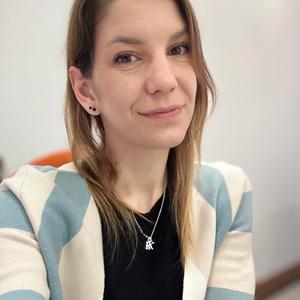
Matea's story
Patient
February 6, 2026
When I was 10 years old, I was diagnosed with acute lymphoblastic leukemia for the first time. In 2003, I underwent treatment according to the BFM [Berlin-Frankfurt-Münster] 2002 chemotherapy protocol, which lasted until May 2005. As a child, I did not fully understand how serious and life-threatening the disease was. I simply accepted treatment as part of my life, and once the treatment ended, I returned to childhood. I remained under regular medical follow-up until 2008, after which my life continued without limitations.
Years later, life unfolded in the most beautiful way. I graduated from university, got married, and in 2017 became a mother to a wonderful baby boy. Leukemia felt like a distant chapter of my past – something I believed I had left behind forever.
But in 2019, my body sent me a quiet warning. Large, painless bruises began appearing on my legs. Because of my medical history, I trusted my instincts and asked for blood tests. The results showed the presence of blasts, and a bone marrow biopsy confirmed a relapse of B-cell acute lymphoblastic leukemia.
This time, everything was different. I was no longer a child protected by innocence. I understood exactly what this diagnosis meant – and still, I chose to fight.
I underwent six cycles of intensive chemotherapy according to the HOVON 100 protocol for acute lymphoblastic leukemia, a standardized hematology clinical trial regimen.
Of course, chemotherapy came with many side effects: high fevers, significant fluid retention, bloating, hair loss, and extreme physical exhaustion. The course was further complicated by allergic reactions to asparaginase and catheter-related thrombosis. Surprisingly, chemotherapy itself was not the hardest part for me. I had been through it before and knew what to expect. What hurt the most was being separated from my boys – my child and my partner. Not being able to be with them every day was incredibly painful, but at the same time, they became my greatest source of strength. I kept telling myself that chemotherapy was something I could endure and complete.
In my mind, chemotherapy was a phase.
Transplantation was something entirely different.
In January 2020, I underwent an allogeneic stem cell transplantation from a matched unrelated donor while in complete remission, following TBF [thiotepa, busulfan, fludarabine] conditioning with ATG [anti-thymocyte globulin], cyclosporine, and mycophenolate mofetil. Altogether, I spent 51 days in the hospital, including 6 days of preparation before transplantation and 1 day of recovery, with the remainder of my hospitalization marked by uncertainty and severe complications.
Within the first 42 days after transplantation, I experienced multiple serious complications. These included heavy bleeding, severe bone and muscle pain, extreme muscle weakness requiring neurological evaluation, viral infection complicated by pneumonia, and ultimately severe acute graft-versus-host disease affecting both my skin and liver. High-dose corticosteroids were required, followed by additional immunosuppressive therapies, including ruxolitinib and extracorporeal photopheresis.
I was discharged from the hospital 42 days after transplantation, but treatment and recovery continued for many months. Immunosuppressive therapy was gradually adjusted and slowly reduced. Mycophenolate mofetil was discontinued first, followed by tapering and eventual cessation of corticosteroids. During this period, I developed BK virus-associated cystitis, which required treatment with intravenous immunoglobulins. Antifungal therapy was modified, and extracorporeal photopheresis continued alongside additional antifungal treatment.
Over time, my condition slowly stabilized. Ruxolitinib was discontinued, and photopheresis was gradually reduced from twice weekly to monthly sessions before being stopped completely. Attempts to taper cyclosporine were challenging and at times led to worsening symptoms, requiring careful dose adjustments. At 18 months after transplantation, in June 2021, cyclosporine was finally discontinued. Only then was I able to begin revaccination, marking an important step in rebuilding my immune system.
Several months later, new long-term consequences began to surface. In July 2020, I started experiencing pain in both hips and knees. After evaluation, I was diagnosed with bilateral femoral avascular necrosis. In July 2021, I underwent left hip arthroplasty, followed by right hip arthroplasty in June 2022. My reproductive health was also affected. I had my last natural menstruation in 2020, and in August 2023 I began hormone replacement therapy. In January 2025, osteopenia was diagnosed, and I started vitamin D supplementation to support bone health.
Despite all these challenges, I proved to myself that I am strong and capable. In 2022, I returned to work, and in 2025, I completed my master’s degree in economics, received the Dean’s Award, and celebrated a personal victory that felt even more meaningful because of all I had endured.
Although today I am medically considered “healthy”, survival did not bring an immediate return to normal life. I live with the psychological consequences of everything my body and mind have endured. I experience periods of depression, anxiety, and a persistent feeling that my body is constantly on alert – not because I fear the disease will return and not because I live in fear of illness. I truly believe that leukemia is behind me. Yet my body remembers. It remains vigilant, as if it is still expecting something to go wrong.
Life continued for everyone else while mine was put on pause. When I finally returned, the world had moved on, and I had to learn how to re-enter it. Adapting to everyday life after survival has been one of the most difficult parts of this journey. Learning how to live without constant tension, how to trust my body again, and how to function in “normal life” without anxiety is still a work in progress.
This is a side of survivorship that is rarely spoken about. We celebrate remission and the end of treatment, but we talk far less about the emotional and psychological aftermath. Healing does not end when treatment stops. For many of us, it is where the most delicate and complex part of the journey truly begins.
By sharing my story, I hope to support others who find themselves in a similar situation – to remind them that struggling after survival does not mean weakness, and that they are not alone.